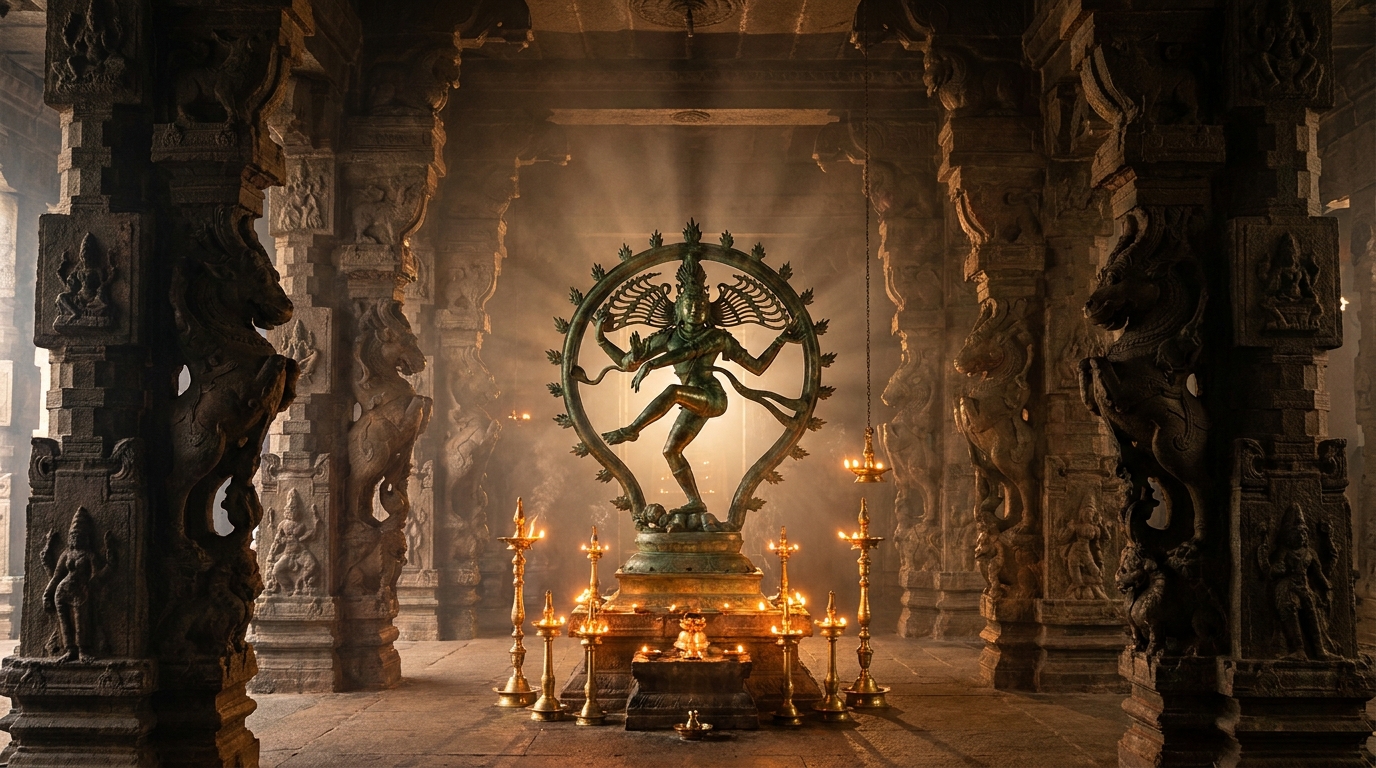
1. The Meaning of Tala in Ancient Sculpture
In Indian sacred art, an icon is never scaled by arbitrary centimeters or inches. It is measured according to the Talamana system, where:
- 1 Tala = 12 Angulas (the span of a palm from wrist to tip of the middle finger).
- 1 Angula = 8 Yavas (grains of barley set side-by-side).
By grounding the measurement in human and natural constants, the sculpture scales organically to any dimension—from a 6-inch private shrine icon to a 12-foot temple gateway vigraha.
2. The Fivefold Talamana Classification
- Uttama Dasatala (124 Angulas): Reserved for the supreme trimurti (Shiva, Vishnu, Brahma) and Great Devis (Durga, Lakshmi, Saraswati).
- Madhyama Dasatala (120 Angulas): Used for Uma, Sita, Rukmini, and Kartikeya.
- Adhama Dasatala (116 Angulas): Used for Indra, Agni, and planetary guardians (Dikpalas).
- Navatala (108 Angulas): Used for Gandharvas, Yakshas, and sanctum attendant deities.
- Ashtatala (96 Angulas): Used for mortal kings, donors, and human devotees.